In collaboration with AI Powered Product Teams
Through AI, product marketing materials are expected to be better written and authoritatively reflect user pain points and industry-specific issues. And (if that wasn’t a big enough challenge), AI promises to increase your group’s process efficiency.
What Product Marketing tasks are common use cases for AI (and which are rare)
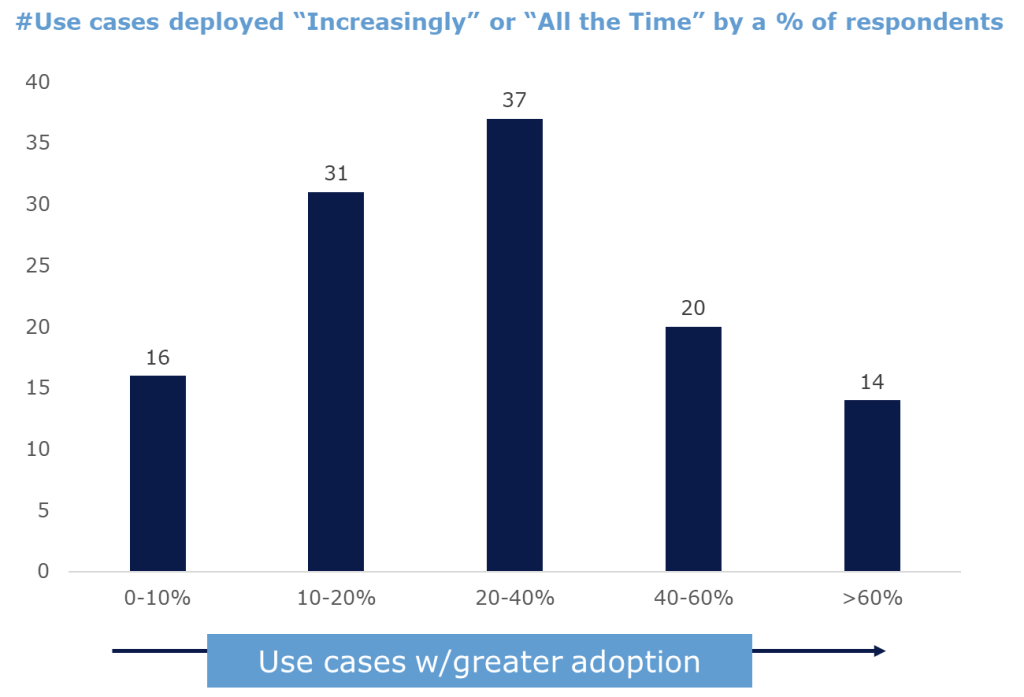
AAA data shows some extremes of AI adoption. Across 110 use cases, there were 14 use cases where >60% of respondents said they use AI “Increasingly” or “All the time.” In those areas AI has effectively become the way “everyone does things.” Meanwhile there were 16 use cases where <8% were adopting AI frequently. And despite the hype, 5,000 of 7,000+ individual responses were either “Not Yet” or “Planning To” regarding AI deployment for marketing use cases. It is still early.
Below are a few example areas of product marketing practice where AI is changing people’s work productivity.
Creating content
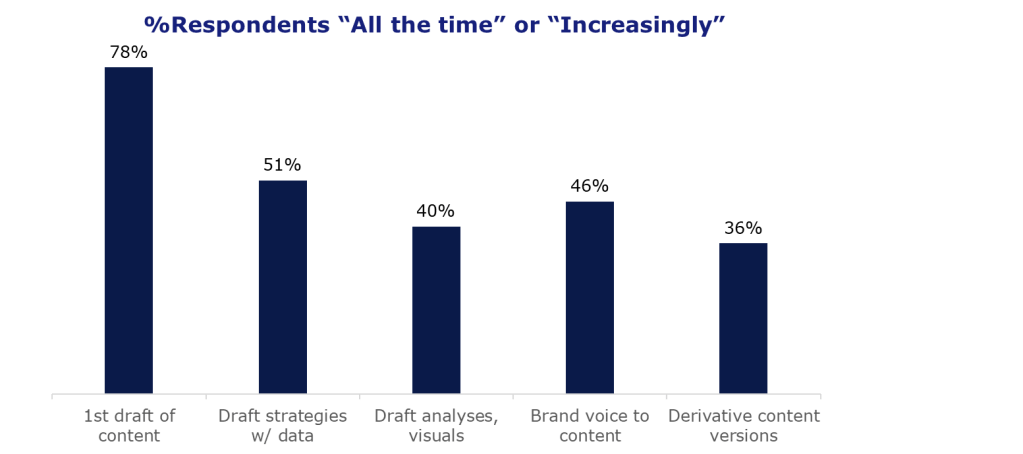
The far and away leading use cases of AI are around content development, both for internal/strategy purposes and for external prospect facing material. And for both of these scenarios, most product marketers are using AI to get past the blank page to a workable draft. However, there are still many more sophisticated improvements possible to content development through AI which are only being adopted by a minority of product marketers. In the chart below, you can see that many fewer marketers are taking advantage of AI’s capabilities around data analytics, creation of derivative content (e.g. for different personas) and making content better through brand standards.
Market and Competitive Intelligence: Broad Interest, Shallow Usage
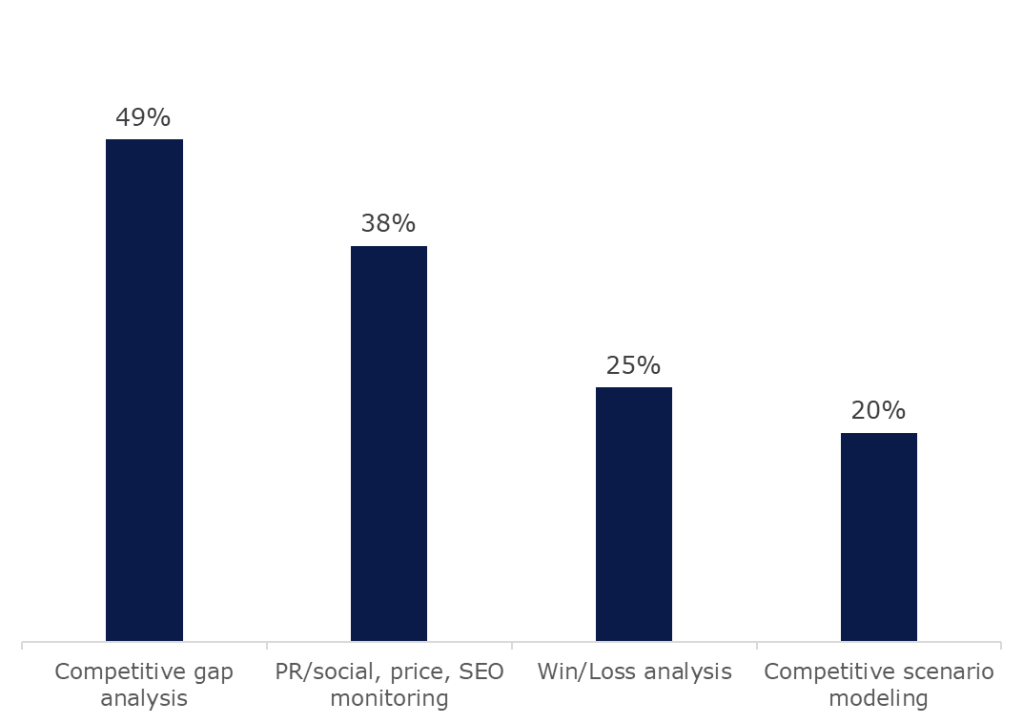
AI is making it easier to detect competitor moves and market shifts. This capability could be a powerful source of insight for leaders responding to the market landscape. Most teams are just beginning to use AI in this area for periodic tasks such as gap analysis or sales battlecards, and likely still relying on rep anecdotes. This gap will be a place where product marketers direct teams (and careers) to an advantage because they can develop a higher-resolution picture of the market.
Moving to always on insight for marketing decisions
Closely related to the competitive intelligence point, AI’s ability to broadly search the web and digest internal data resources about prospect opinions, brings a range of new insight sources into the field of play for product marketing leaders. AI’s strength in pattern detection and continuous scanning can meaningfully outperform manual processes around “understanding prospects”. AAA asked about a range of these scenarios and found areas of niche usage that product marketers should pay attention to.
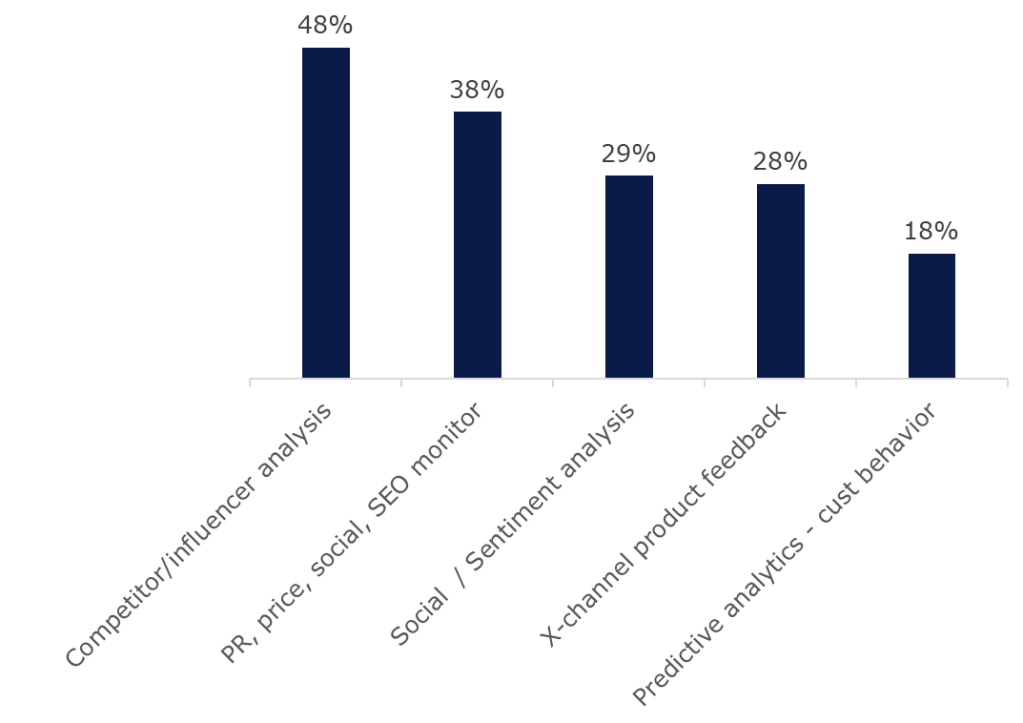
Only 28% of marketing leaders reported using AI to consolidate cross-channel feedback and an even lower percentage said they were using AI to fuel predictive analytics of customer behavior (e.g. churn or upsell). These adoption niches represent a bleeding edge of product marketers using AI +customer/prospect data directly into their action plans. AI creates the potential to
- Detect market shifts earlier (competitor, customer churn)
- Surface new entrants making progress faster
- Feed new data sources into product-market fit discussions
 AI Advantage Assessment
Leave a comment